Introduction
Controversy has surrounded the
craniopharyngiomas as it has almost no other tumor affecting the
brain; the origin, natural history, operative removability, response
to radiation, and optimal therapy of the lesion have all been topics
of debate. Many of these questions remain unresolved, and the
conclusions must be regarded as only
tentative.
Origin
At the end of the nineteenth century,
pathologists were intrigued by a strange group of epithelial tumors
encountered above and within the sella turcica. Mott and Barrett, in
1899, postulated that these tumors might arise from the hypophyseal
duct or Rathke's pouch. This amazingly prescient theory, based on
three cases of third-ventricular tumor, continues to be widely held.
Histologic characteristics of these tumors were well described in
1904 by Erdheim, who pointed out similarities between
craniopharyngiomas and adamantinomas, tumors known to be primitive
neoplasms of buccal origin. He thought this close resemblance
proved that craniopharyngiomas arose from ectoblastic remnants of Rathke's duct. In addition, the anterior wall of Rathke's pouch
forms both the pars tuberalis and the anterior lobe of the
pituitary, the most common sites for craniopharyngiomas. Since that
time, craniopharyngiomas have been found along the
path of development of Rathke's pouch from the pharynx to the floor
of the sella, as well as above and within the sella.
However, while craniopharyngiomas and
adamantinomas have a similar appearance, the histologic picture
differs greatly between a Rathke's cleft cyst and a
craniopharyngioma, although these entities are postulated to have a
common origin. The Rathke's cleft cyst may be a simple cystic
enlargement and may lack the changes induced by neoplastic
transformation found in craniopharyngiomas.
Some investigators have demonstrated
histologic differences between adult and childhood
craniopharyngiomas that might indicate separate origins. They
stress that almost half the adult tumors are made up of squamous
epithelium, often with a papillary form, without palisading or other
adamantinomatous characteristics of the childhood tumor. These
differences are not confirmed
in some series. In one series
17 percent of patients had the papillary type of tumor; these
patients ranged in age from 26 to 54 years. In the same series, adamantinomatous tumors were found in patients ranging in age from I
to 69 years. Other workers have tried to predict the behavior and
clinical likelihood of recurrence on the basis of these pathologic
differences and have found that
both the outcome of surgery and the
recurrence rate were slightly better for papillary tumors than for
the adamantinomatous variety.
Squamous epithelial rests in the
hypophysis were described in autopsy material by Carmichael more
than 70 years ago. However, these cell rests are found in only 3
percent of neonates and are found with increasing frequency in
each succeeding decade. This finding suggests that an embryonic
origin need not be postulated for such cells, which may appear
later in life because of cellular alteration or metaplasia of
pituitary cells, which are also of ectodermal origin. |
|
Incidence
Craniopharyngiomas are variously reported to constitute between 2.5
and 4 percent of all brain tumors. Since almost half these tumors
occur in childhood, their incidence in children is higher; they
constituted 9 percent of Matson' s series of childhood tumors, in
which craniopharyngioma was the most common nonglial tumor.
When the differential diagnosis is limited to tumors of the sellar-chiasmatic
region, craniopharyngiomas constitute a majority in children (54
percent) but only 20 percent in adults. However, craniopharyngiomas may become symptomatic at any
age, with the oldest in this series being 71 at the time of
operation. The tumor occurs with equal frequency in both
sexes throughout life. Although a male preponderance in children has
been reported, it is not supported by other reports of large
series of children with equal sex distribution.

|
|
|
Symptoms and Signs
Although lesions that expand in the
suprasellar region have a high potential for producing neurological
deficits, there may be some variation in presenting complaints, and
adults and children have dissimilar clinical syndromes. These
differences are summarized in Tables-1 and 2. Since
craniopharyngiomas are slowgrowing, extra-axial tumors, they may
grow quite large before causing symptoms, especially in children.
Many of these tumors in children obstruct the flow of cerebrospinal
fluid (CSF) and present with increased intracranial pressure. In
addition, children will tolerate a surprising degree of visual loss
without complaint and may continue school and watch television
without arousing the suspicions of parents or teachers despite
severe deficits (in one case, complete visual loss in one eye and a
major field cut in the other).
Adults are much more sensitive to
visual impairment, and it is almost uniformly a complaint of adult
patients. A notable exception are patients with purely intrasellar
lesions. In institutions treating large numbers of women with
complaints of amenorrhea or infertility, a higher proportion of
intrasellar tumors is now found than was reported in series of even
a decade ago.
Psychiatric
symptoms are difficult to diagnose in children, and most examples
are found in adults, usually in association with hydrocephalus.
Decreases in mentation (especially memory), apathy, incontinence,
depression, and hypersomnia may be noted. Long-standing mentation
deficits or depression are associated with a poor prognosis. Kahn
and coworkers found the marked mental changes of Korsakoff's
syndrome in 3 of 12 adult patients
|
|
Diagnostic
Procedures
Almost all craniopharyngiomas have a
common origin from cells in the infundibular region. Despite this
common site of origin, the growth pattern of the tumor varies
enormously. To select the proper operative approach and identify
tumors that will require staged operations, it is preferable to have
complete radiologic tumor visualization in three planes. Both
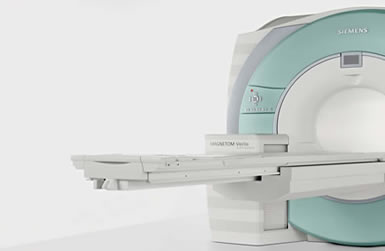
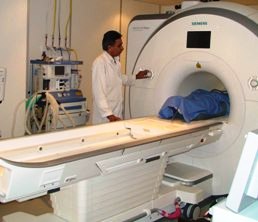
computed tomography (CT) and magnetic resonance imaging (MRI) are
used in the evaluation of these tumors. Both types of scanning will
demonstrate the mass of the tumor, outline the ventricular system.
and show where the tumor abuts CSF spaces. Enhancement with an
appropriate contrast agent will often bring out the solid portions
of the tumor and allow better definition of cyst walls. The use of
various MRI sequences often allows correct definition of cystic
portions of craniopharyngiomas, which may appear solid on CT
scanning. The density of cysts varies widely, depending on the
content of protein and blood and the presence of keratin and calcium
salts.
Sagittal MRI views have proved most
useful. They show the relationship between the tumor and the optic
nerves and chiasm, pituitary stalk, and basilar artery. In
particular. tumors that look intraventricular on axial CT scans may
be shown by the sagittal MRI view to abut the basal cisterns.
Approaching the tumor through the basal cisterns may allow removal
by entirely extraaxial pathways. Although MRI has been the most
useful modality for defining the geometry and extension of
craniopharyngiomas, it may fail to reveal solid, calcified portions
of the tumor. Similarly. small calcifications that remain after
surgery may not be appreciated on MR scans. We have found a
combination of MRI and CT to be useful preoperatively and
postoperatively.
Some authors have advocated
preoperative angiography in the diagnostic workup of these tumors.
However. the relationship between the tumor wall and the major
vessels of the circle of Willis can be defined on MR scans, and MR
angiography can be used as well. Scanning techniques have made
preoperative angiography unnecessary in our practice for more than
tow decades. Vessels that directly supply the craniopharyngioma are
quite small and difficult to demonstrate on angiography. and even
the perforating vessels that must be saved are not well seen.
Changes in the structure in the bone
at the base of the skull may be identified by CT or plain radiograph
and are characteristic in craniopharyngiomas. Two-thirds of the
adults and almost all of the children will show bone changes on
these studies. Half of all patients have an enlarged sella. Tumors
with a suprasellar component may cause erosion of the dorsum sellae
and anterior clinoids. Tumor calcification is found in approximately
85 percent of childhood tumors and 40 percent of those in adults.
Endocrine assessment is usually
performed preoperatively. These tests are not diagnostic but
indicate those patients at higher risk endocrinologically. Both
hypoadrenalism and hypothyroidism may contribute to poor intra- or
postoperative results. Hypoadrenalism is correctable and is
adequately treated by the high dosages of steroid used in
contemporary cranial surgery. Hypothyroidism takes longer to correct
and correction should be attempted preoperatively if the patient
shows clinical manifestations of decreased thyroid function or has
mentation deficits and if the need for surgical intervention is not
pressing. If endocrine results are not available and if there is an
urgent need to decrease intracranial pressure, CSF shunting or
external drainage may be employed. and the major operation deferred.
|
|
|
Control of Hydrocephalus
Hydrocephalus is a complicating
factor found in 15 to 30 percent of craniopharyngioma patients.
Proper management of the enormous positional shifts that occur when
treating the tumor and hydrocephalus simultaneously will help to
avoid major complications. When the patient's symptoms and signs are
solely related to increased
intracranial pressure, treatment of hydrocephalus is indicated
as a first step. However, decompression of the hydrocephalus may
allow the tumor to change position. For example, a tumor located
beneath the optic chiasm can cause greater stretching of the
chiasm and a larger bitemporal field cut when the lateral
ventricles are decompressed. Very rapid decompression of
hydrocephalus may allow the cortex to fall away from the inner
table, creating subdural hygromas or hematomas or even leading
to venous thrombosis. Installing a shunting device
preoperatively may make it difficult to control the rate of
decompression. For this reason, valve-regulated external
drainage may be useful for carefully controlling the rate of
decompression.
Occasionally
it may be useful to decompress the hydrocephalus and a cystic
tumor simultaneously. In a recent case, a huge cyst filling the
third ventricle caused hydrocephalus. Catheters placed in the
cyst and ventricular system for 24 h allowed controlled
decompression of both spaces, making the operation easier and
facilitating total removal of the tumor.
|
 |
|